History of money and trading · Part 12 of 20 · Roman Republic and Empire
English-first edition. Urdu translation will follow. Dates use BCE/CE; illustrations are explanatory, not evidence.
China’s round coin chapter showed how monetary standards must be maintained. Rome gives us another problem: a familiar name and design can remain while a coin’s composition changes. The denarius helps explain debasement, but it cannot by itself explain every Roman price movement or the empire’s eventual political history.

A denomination has a history
The denarius was an important Roman silver denomination, but its place in the monetary system changed over a long period. Rome used several metals and denominations. The history of one coin should not stand in for all Roman money across every province and century.
A name is a useful thread, not a guarantee of unchanging content. To compare two issues, researchers must consider date, mint, weight, composition and context. A chart labeled simply “Roman money” can conceal differences more important than its smooth line suggests.
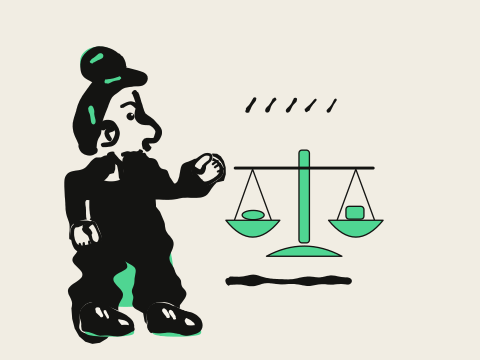
Debasement describes a material change
Debasement means a reduction in precious-metal content relative to an earlier standard, often by increasing the proportion of less valuable metal. It must be established for specified issues rather than inferred from an emperor’s reputation.
Liverpool and Warwick researchers used metal analysis to investigate a late-Republican denarius episode. Their findings show that deterioration and restoration could occur within a particular crisis. The history was not an uninterrupted slide from pure money to worthless metal.

Inflation describes prices, not alloy
Inflation concerns rising prices. Debasement concerns coin composition. The two can interact, but proving that a particular monetary change caused a particular price movement requires evidence about prices, supply, demand and the treatment of the currency.
Imagine an invented coin that contains less silver but continues to be accepted at an established payment value. How prices respond depends on behavior and institutions, not only on the metallurgist’s result. This example explains a distinction; it is not a model of one Roman reform.

Several pressures can operate together
Fiscal demands, warfare, production and distribution disruptions, confidence and monetary reforms can overlap. Surviving price evidence is uneven across regions and periods. We should not convert that patchy record into a precise empire-wide inflation series without specialist support.
Banca d’Italia’s museum overview connects deteriorating coinage with later Roman monetary difficulties. That is useful context, not proof that one variable caused the empire to fall. Long political histories rarely fit inside a single alloy percentage.

Read the object and the argument separately
A coin analysis can support a statement about metal. A price document can support a statement about a transaction or quotation. A broader economic explanation connects evidence and therefore carries additional assumptions. Readers should be able to see those steps.
That habit matters beyond Rome. A familiar monetary unit can change institutionally, and a striking visual comparison can still be incomplete. History becomes clearer when a dramatic story is asked to identify its date, place and supporting record.
The story continues
Before leaving antiquity, the next article revisits an older thread: credit and contracts. That deliberate return to Mesopotamian loans and Roman bankers corrects any impression that lending began only after coins.

Continue the history
Sources and further reading
Sources were consulted on 22 October 2026. External links open their publishers’ pages. Examples and illustrations are original LearnSMC work; no live market readings are supplied.
- University of Liverpool — Research team sheds light on Roman financial crisis
Metallurgical evidence for a specific late-Republican denarius episode; not an empire-wide price series.
- Banca d’Italia Money Museum — Minted coins
Museum overview of coinage and Roman currency deterioration.
- The Cambridge Ancient History — Commerce and finance
Accessible chapter summary on ancient credit and Roman auction bankers, not the paywalled chapter.