History of money and trading · Part 11 of 20 · First millennium BCE; Qin unification in 221 BCE
English-first edition. Urdu translation will follow. Dates use BCE/CE; illustrations are explanatory, not evidence.
Persia and Alexander showed how political reach and monetary uniformity can differ. China offers a parallel history of regional forms and attempts at standardization. We return to the knife and spade monies introduced in Part 7, moving backward in date before following their later development.
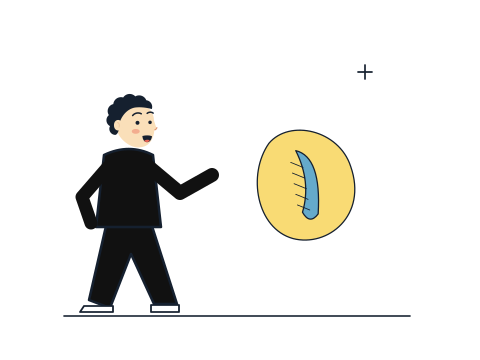
Different shapes can do monetary work
The Money Museum describes regional bronze knife and spade currencies during the first millennium BCE. Their resemblance to tools distinguishes them from the familiar Mediterranean disc. Calling them money does not require pretending their users were waiting for the correct shape.
A monetary spade is not necessarily a working farm implement. Designs could preserve an association with tools while becoming objects intended for exchange. The relationship between practical object, symbol and monetary type developed over time and varied between regions.

Casting is a different production tradition
Chinese bronze monies were generally cast, contrasting with the striking of many Mediterranean coins. The method affects molds, shapes and the practical organization of production. It is a technological difference, not a ranking from primitive to advanced.
Our illustrations are explanatory objects rather than exact reproductions. A drawn knife does not certify the date, inscription or denomination of an archaeological piece. For those questions, a specific catalog entry and its attribution are necessary.

Round coins and the central hole
Round coins with central holes became a durable Chinese monetary form. The hole helped make strings of coins practical. A string can simplify handling while leaving questions about counting, quality and accepted value to the monetary practices of its setting.
A drawing of a string is not evidence that every string always held an identical number of coins. Local conventions and actual contents can differ. The series avoids a universal conversion rate where the historical object or transaction has not been specified.

Qin unification and monetary policy
After unification in 221 BCE, the Qin promoted round ban liang coinage in place of regional varieties. This is a political standardization story as well as a story about shape. An accepted type can help an authority coordinate payments over a wider territory.
Its introduction did not make every later Chinese monetary problem disappear. Weight, production, competing forms and the relationship between official rules and use remained matters of policy and practice. A standard is a maintained arrangement, not a permanent cure.

A parallel strand, not a borrowed ending
The existence of distinctive Chinese forms helps unsettle a single-origin account centered on Lydia. That does not require awarding an exact global first date to a disputed early type. Early dates can depend on how securely finds and casting contexts are identified.
The comparison also reminds us that money can look unfamiliar while doing recognizable work. A knife-shaped bronze object and a stamped disc may both support payment, yet differ in production, symbolism and institutions. Similar functions do not make their histories identical.

The story continues
Next we return west to Rome and follow the denarius through changing political and fiscal conditions. The question shifts from establishing a recognizable coin to what happens when the metal inside a familiar coin changes.

Continue the history
Sources and further reading
Sources were consulted on 22 October 2026. External links open their publishers’ pages. Examples and illustrations are original LearnSMC work; no live market readings are supplied.
- American Numismatic Association Money Museum — Traditional Chinese Money
Knife and spade forms, regional variation and Qin round coinage.
- Encyclopaedia Iranica — Coins and Coinage
Achaemenid and later currency; local circulation versus imperial standards.
- Allison Truitt — Money, Open Encyclopedia of Anthropology
Anthropological definitions and the limits of the barter-origin story.