History of money and trading · Part 20 of 20 · Eighteenth century to modern electronic markets
English-first edition. Urdu translation will follow. Dates use BCE/CE; illustrations are explanatory, not evidence.
The previous article explained changing international monetary rules. Our final chapter returns to the places and mechanisms through which people trade. We revisit exchange development before moving to screens: money’s history and market technology overlap, but neither is a simple replacement sequence.

An exchange organizes encounters
The NYSE traces its origins to the 1792 Buttonwood Agreement. Exchanges developed rules, membership and procedures around securities trading. Their institutional histories differ; they should not be collapsed into one founding date for all financial markets.
A trading floor made bids, offers and agreements visible through people and established procedures. The physical crowd mattered, but the institution was more than a room. A room full of shouting people without common rules is merely an unusually stressful meeting.

Futures standardize a future obligation
A forward agreement can set terms today for a later exchange. Organized futures markets developed standardized contracts and systems for managing obligations. CME’s history identifies the Chicago Board of Trade’s formation in 1848 and standardized futures contracts in 1865.
Standardization helps participants know what contract they are trading, but a futures contract is not simply a warehouse receipt. Delivery terms, settlement methods, margin and clearing arrangements depend on the product and venue. Historical introduction should not substitute for actual contract specifications.
Electronic books make some orders visible
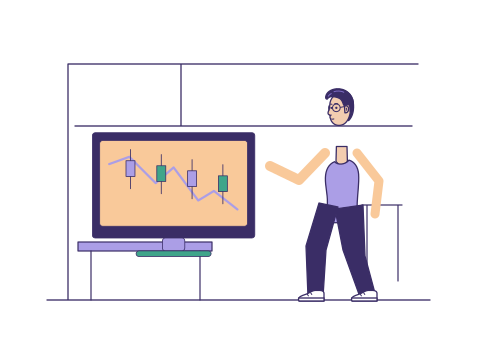
The shift to electronic markets happened through multiple systems, not one worldwide opening day. CME’s Globex platform launched in June 1992, a milestone in electronic futures trading. Electronic trading records and matches instructions under venue rules. In an order-book market, bids express willingness to buy and offers willingness to sell at stated prices. Trades occur when compatible instructions meet; not every displayed order becomes a completed transaction.
A limit order specifies a price condition, while a market order generally seeks execution against available interest. Specific protections and priority rules vary. Quotes can change or be canceled, and displayed depth is not a census of every intention held by every participant.

Digital money is not one category
Commercial-bank deposits were electronic long before cryptocurrencies became prominent. A deposit is a claim on a bank; a central-bank digital currency would be a central-bank liability. Stablecoins and other cryptoassets have different structures and risks, depending on their design.
The Bank of England’s sources distinguish these categories rather than treating every digital balance as equivalent cash. This is a neutral classification, not a current adoption announcement or an endorsement. Digital form tells us how information is represented, not who stands behind a claim.

Return to foundations, with better questions
From gifts to order books, recurring questions remain: what is being exchanged, which unit expresses it, who owes what, and how is settlement completed? The answers changed dramatically, but the questions help prevent a colorful chart from replacing institutional understanding.
Modern chart concepts such as liquidity sweeps or order blocks are interpretive frameworks, not direct observations of every trader’s motive. A price pattern cannot prove that ancient or modern institutions share one secret algorithm. First understand orders, transactions, spreads and the limits of visible data.

From history to market foundations
This closes the 20-part history and opens the next learning path: Part I — Market Foundations. Begin with “What Actually Moves Price?” to connect the story to orders and execution. Then study chart frameworks as hypotheses with limitations, never as historical proof, guaranteed signals or investment advice.

Continue the history
Sources and further reading
Sources were consulted on 22 October 2026. External links open their publishers’ pages. Examples and illustrations are original LearnSMC work; no live market readings are supplied.
- NYSE — The History of NYSE
1792 origins and the exchange’s technological chronology; institutional primary source.
- CME Group — Midwest Grain Trade: History of Futures Exchanges
CBOT formation in 1848 and contract standardization in 1865; exchange educational transcript.
- CME Group — Product Anniversaries
Institutional chronology of CME Globex’s June 1992 launch; not a claim that it was the first electronic market of every kind.
- SEC Investor.gov — Understanding Order Types
Investor bulletin defining market and limit orders and distinguishing execution from price conditions.
- Bank of England — How is money created?
Commercial-bank deposits and electronic money; not a claim that all digital assets are money.
- Bank of England — New forms of digital money (2021)
Distinguishes commercial-bank deposits, stablecoins and potential central-bank digital money; historical discussion, not current adoption advice.