History of money and trading · Part 2 of 20 · Across many periods
English-first edition. Urdu translation will follow. Dates use BCE/CE; illustrations are explanatory, not evidence.
The previous article began with relationships, sharing and obligations. Barter changes the immediate arrangement: goods or services are exchanged directly rather than sold for a commonly accepted payment medium. It is a real practice, but not a proven universal stage before money.
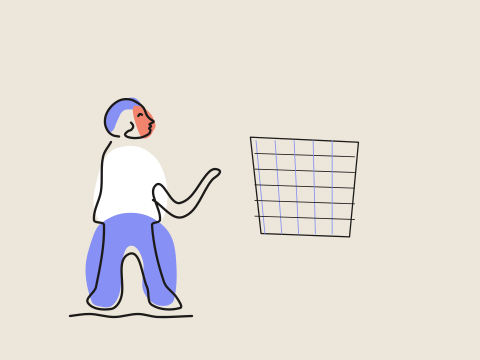
Two wants must line up
Imagine someone offering a spare fishing net in return for pottery. The potter must want that net, at that moment, and agree on how much pottery to exchange. This fictional example illustrates the double coincidence of wants: each participant must want what the other offers.
The problem also involves timing, quantity and quality. A person may want a net next season rather than today. A pot may be worth less than an indivisible tool, and the parties may disagree about the tool’s condition. Finding a partner does not finish the negotiation.

A useful model is not an origin certificate
The coincidence problem helps explain why a widely accepted medium can make exchange easier. Sell the net to someone who wants it, then use the proceeds with a different potter. That is a logical comparison between transaction arrangements.
It does not establish that a village of isolated barterers existed first and then collectively invented money. Archaeological evidence cannot usually reveal the terms of an exchange, and anthropological research does not provide a general sequence of pure barter economies becoming monetary ones.

Credit changes the question
A potter might provide the pot now and accept something later. If the parties recognize an obligation, the immediate need for matching goods is reduced. They must instead solve questions of trust, memory, enforcement and repayment.
That is not barter with a very long shopping queue. An outstanding debt is a different relationship from a completed direct swap. Gift obligations can differ again, especially where an exact equivalent or due date would be inappropriate. Useful categories should clarify these differences.

Barter can coexist with money
People who know monetary prices can still exchange objects directly. Barter may also become more important where usable currency is scarce or payment systems fail. Its presence therefore cannot by itself date a society to an early developmental stage.
Nor is every non-cash transaction barter. Paying with a bank deposit uses money even though no coin appears. Paying a debt in grain may settle a pre-existing account. The historian needs the agreement, not just a photograph of two objects changing owners.

The real difficulty is coordination
Direct exchange can work well when needs align and participants understand one another. Its limitations become sharper when partners, distances or goods multiply. Counting possible exchanges is a thought exercise; it is not a measurement of prehistoric inconvenience.
The larger point is that every arrangement moves a difficulty somewhere. Barter emphasizes matching wants; credit emphasizes keeping promises; monetary payment depends on acceptance and settlement. No system makes social coordination disappear. It changes the paperwork, sometimes literally.

The story continues
Now we can widen the map without assuming every distant object was bartered. The next article follows obsidian, flint and shells through Stone Age networks, and asks how far physical evidence can carry the story.

Continue the history
Sources and further reading
Sources were consulted on 22 October 2026. External links open their publishers’ pages. Examples and illustrations are original LearnSMC work; no live market readings are supplied.
- Humphrey and Hugh-Jones — Barter, Exchange and Value (Cambridge University Press)
Publisher preview and introductory discussion consulted, not the entire book.
- Allison Truitt — Money, Open Encyclopedia of Anthropology
Anthropological definitions and the limits of the barter-origin story.
- Yunxiang Yan — Gifts, Open Encyclopedia of Anthropology
Gift obligations, reciprocity and the diversity of exchange relationships.